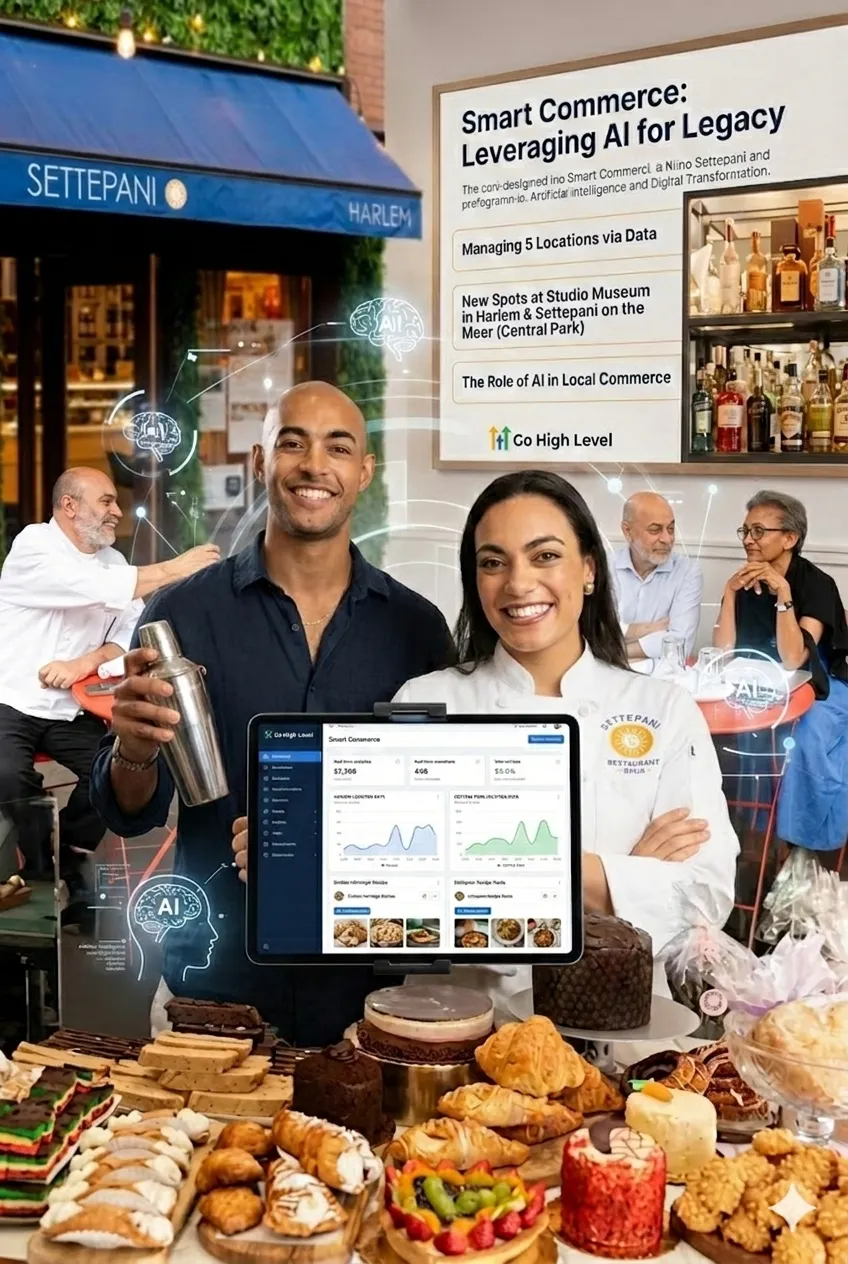
The Business of Legacy: Anchoring the Avenue—How the Settepani Family Marries Artisanal Tradition with Harlem’s Digital Future
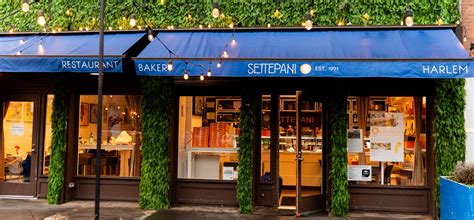
In the heart of Harlem, on the corner of 120th Street and Lenox Avenue, sits a landmark that is much more than a restaurant. It is a living, breathing history book. The sign out front reads Settepani, which means "Seven Breads" in Italian. But for the people who live, work, and dream in this neighborhood, the name stands for something even bigger: resilience, family, and the future of Harlem.
As we celebrate the Black History Month Centennial and look toward the American Semiquincentennial (the 250th anniversary of the United States), Settepani serves as the perfect example of the Black American story. It is a story of immigrants, of hard work, and of a family that refused to let their legacy be erased by time or technology.
A Legacy Built on Waiting
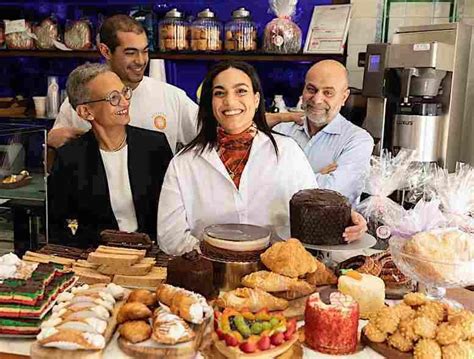
Every great business has a "founding story," and for Settepani, it involves an elder of the Harlem community. During a recent interview with Leah Abraham and her children, Bilena and Seyoum Settepani, Bilena shared a story that has been engraved in her mind since she was four years old.
When Settepani first prepared to open its doors in Harlem around the year 2000, there was a line around the block. The family was running ten minutes late, trying to get the coffee machines hooked up. Leah went outside to apologize to an elderly woman waiting in line. The woman looked at her and said, "Honey, I’ve been waiting my whole life for you to open. An extra ten minutes isn’t going to change anything. If you need, I can go grab cups from my house."
That moment defined the relationship between the Settepani family and Harlem. The neighborhood wasn't just looking for food; they were looking for a place to gather. Today, Settepani is that anchor—a concept often cited by the National Trust for Historic Preservation as vital for urban stability.
Surviving the Shift: From 9/11 to the Digital Age
Leah Abraham, the matriarch of the family and a Black immigrant woman business owner, has seen Harlem through its most difficult transitions. "We signed our lease in 1999," Leah recalls. "Before 9/11, there was an explosion of interest in Harlem. Everyone wanted to be here."
Then, the world changed. After the 9/11 attacks, attention and resources shifted downtown. Many Harlem businesses that were just starting out had to close their doors. But Settepani stayed. Then came the 2008 recession. When people could no longer afford a luxury cappuccino, the family pivoted. They started making affordable salads and sandwiches to serve their neighbors.
This ability to adapt is a key theme in our Harlem Business Resilience series. Settepani didn't just survive; they became the first business in Harlem to secure a sidewalk seating permit, transforming the historic streetscapes of New York City forever.
The Next Generation: Scaling the Seven Breads
Today, the legacy is being carried forward by Bilena and Seyoum. While their father, Chef Nino Settepani, focuses on the "intellectual" side of cooking—researching the historic Sicilian culinary roots of their menu—the children are focused on scaling the brand for the 21st century.
As a result of the 2020 global pandemic, Bilena Settepani began the charge into the digital commerce realm. The pandemic taught her a crucial lesson: while the brick-and-mortar establishment stands as a beacon of culinary delight, the essence of the brand must pulsate in the digital realm to truly flourish.
"We are working on building out our e-commerce," Bilena explains. "Right now, we are known for our Panettone."Unlike the store-bought versions that sit on shelves for months, Settepani’s bread is a fresh, artisanal product. Through platforms like Goldbelly, Bilena has expanded their reach from 120th Street to all 50 states and even into Canada. This move mirrors a wider trend occuring with family brands.
For more local brands moving online, check out our Smart AI directory for Entrepreneurs on Harlem Thrive.
Technology as an Anchor for the Future
Seyoum Settepani views the business as a "living organism." He notes that in Harlem, you cannot fake authenticity. "People are very real here," he says. "We provide a service that is more than food. It’s a community gathering space."
However, Seyoum and Bilena both recognize that the "Business of Legacy" requires using the tools of tomorrow. In an era dominated by Artificial Intelligence and Digital Transformation, the Settepani family is leveraging technology to tell their story.
They use social media to share the history of their Sicilian and Ethiopian heritage. They are using data to manage five different locations, including new spots at the Studio Museum in Harlem and Settepani on the Meer at Central Park. This is the core of what we call "Smart Commerce"—using modern tools to protect old-world traditions.
If you are a business owner looking to follow in Settepani's footsteps, you might find this article on The Role of AI in Local Commerce helpful.
Why Settepani Matters for the American Semiquincentennial
As we approach the 250th anniversary of the United States, we have to ask: what is American history? Leah Abraham believes Settepani is the answer.
"We are the American history," Leah says. "We come from different parts of the world, we settle here, and we create." By combining Italian culinary tradition with the spirit of Harlem, the Settepani family represents the American Excellence that has fueled Harlem for over a century.
The story of Settepani is a reminder that legacy is not something you leave behind—it is something you build every single day. To learn more about the intersection of history and modern business, read our Black History Centennial pieces on The Future of Harlem’s Economic Renaissance.
Conclusion: A Landmark That Never Stands Still
Settepani is a landmark, but it is not a monument. It is a family business that continues to grow and learn. Whether they are dealing with the challenges of a global pandemic or the excitement of shipping a Panettone to a fan in California, the Settepanis remain true to their core values: family first, community always. Faithful to their core values, they've joined influential groups such as the 125th Street BID and the dynamic Mount Morris Park Community Improvement Association (MMPCIA), invigorating community engagement.
As Harlem moves into its next century, businesses like Settepani will be the ones leading the way. They prove that when you anchor your business in legacy and fuel it with technology, there is no limit to how far you can go.
At Harlem Thrive, we are dedicated to making sure every local business has the chance to build a legacy like this. We believe that by keeping community dollars in the community and embracing the digital tools of the future, we can keep the dream of Harlem alive for another 250 years.
Join the Movement
Are you ready to scale your business and anchor your legacy in the digital age? Don't let the fast pace of technology leave your history behind.
Don't let history pass you by—crown your legacy with the tools of tomorrow by partnering with Harlem Thrive to master AI and digital marketing today. Contact us at [email protected] or (646) 828-1238.
