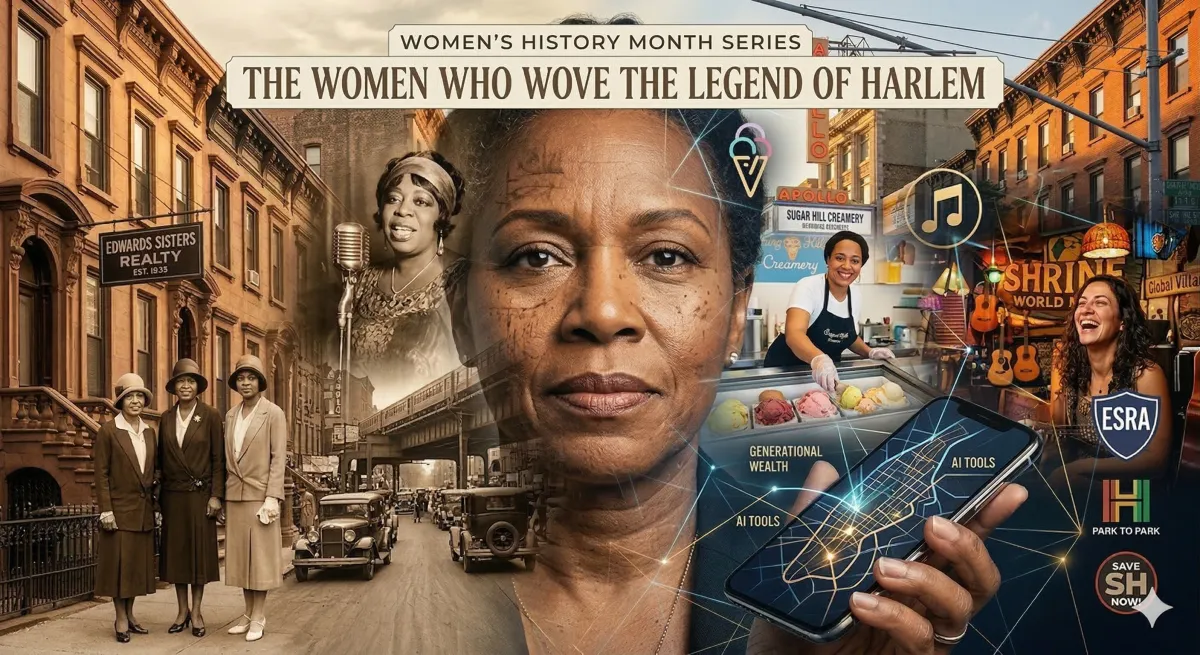
Women Who Built Harlem: Honoring the Pioneers and the Powerhouses of Today
**AI COVER PHOTO RENDERING
Harlem is not merely a geographic coordinate in Upper Manhattan; it is a state of mind, a "Global Village" where every brownstone tells a story and every corner echoes with the audacity of those who dared to build. As we approach America’s Semiquincentennial (250 years)and the Black History Centennial, we find ourselves at a critical crossroads. The question isn't just how Harlem will survive the digital shift, but who will ensure its soul remains intact.
While many look to the poets of the 1920s, the true legend of Harlem was written by women of all backgrounds who treated this neighborhood as a sanctuary and a canvas. At Harlem Thrive, our Women’s History Month series,“Women Who Built Harlem,”celebrates the pioneers who laid the bricks and the modern powerhouses who are ensuring those bricks never crumble.
**AI PHOTO RENDERING
The Foundation: Legends Who Defined the Harlem Identity
To understand the Harlem of today, we must look at the women who refused to let the neighborhood be a footnote. These three legends, spanning different eras and backgrounds, didn't just live in Harlem—they invented it.
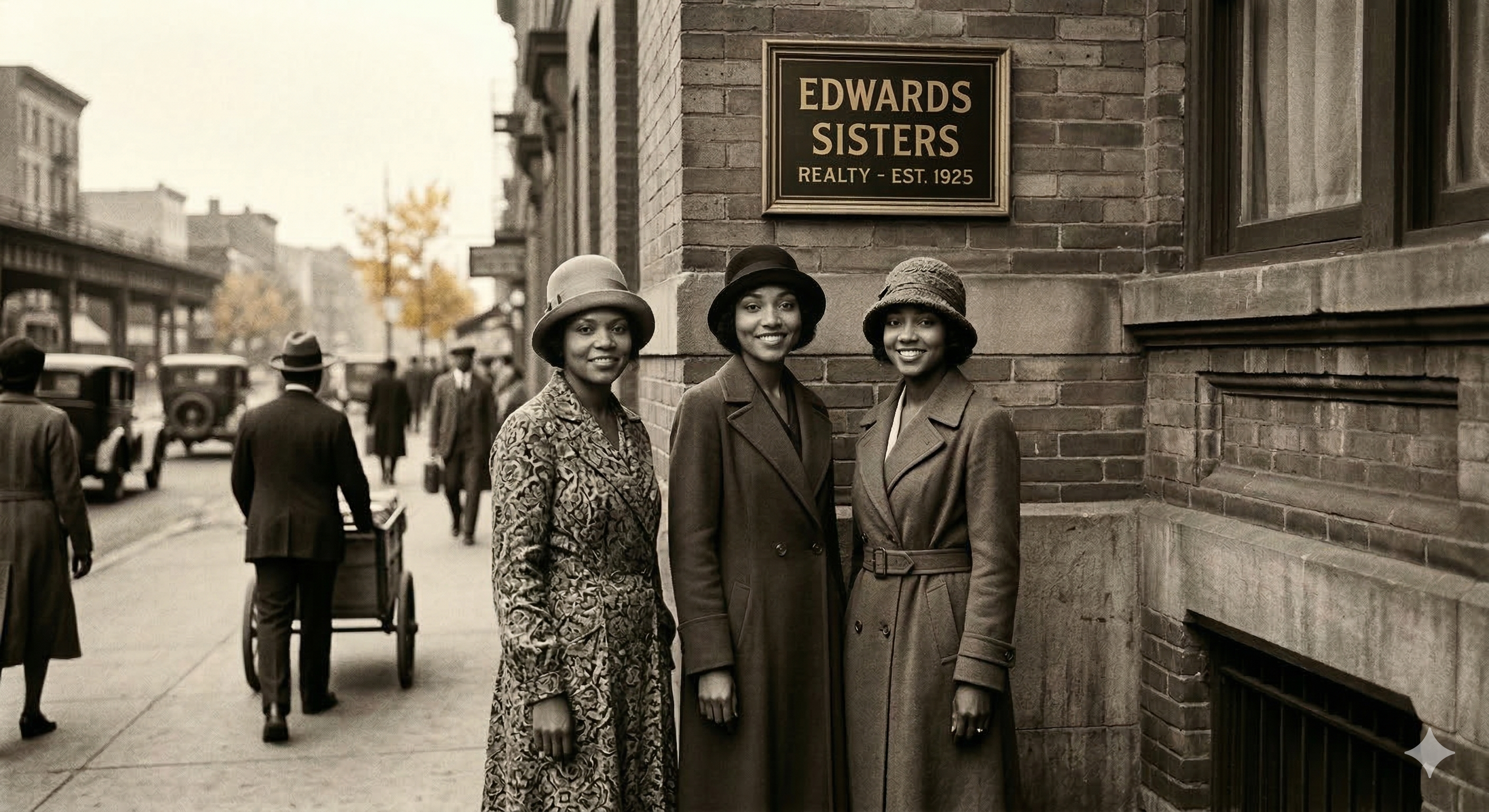
1. The Edwards Sisters (The Infrastructure)
In 1925, three sisters from British Guiana—Lucille, Sarah, and Millicent Edwards—arrived at Ellis Island and looked at a Harlem in transition. While others saw a housing crisis, they saw an empire. They founded Edwards Sisters Realty, becoming the first women to bridge the gap between "renter" and "owner" for thousands of families. They provided the economic backbone that allowed the Harlem Renaissance to flourish. Without the stability of the home, there is no room for the art.
2. Gertrude "Ma" Rainey & The Blues Queens (The Sound)
While the jazz clubs were often male-dominated, women like Ma Rainey and later Bessie Smith brought a raw, unapologetic truth to Harlem’s nightlife. They were the original "independent artists," traveling the country and bringing the wealth of their talent back to Harlem. They established the neighborhood as the undisputed global capital of Black music, a legacy that venues likeShrinecarry today.
3. Dorothy Height (The Social Fabric)
A leader who transcended race and gender, Dorothy Height operated from the headquarters of the National Council of Negro Women in Harlem for decades. She was the "glue" of the community, focusing on everything from literacy to neighborhood safety. She proved that Harlem’s legend isn't just about what you buy; it's about how you take care of the person living next to you.
**AI PHOTO RENDERING
The Modern Vanguard: Sivan Baron and the Global Village
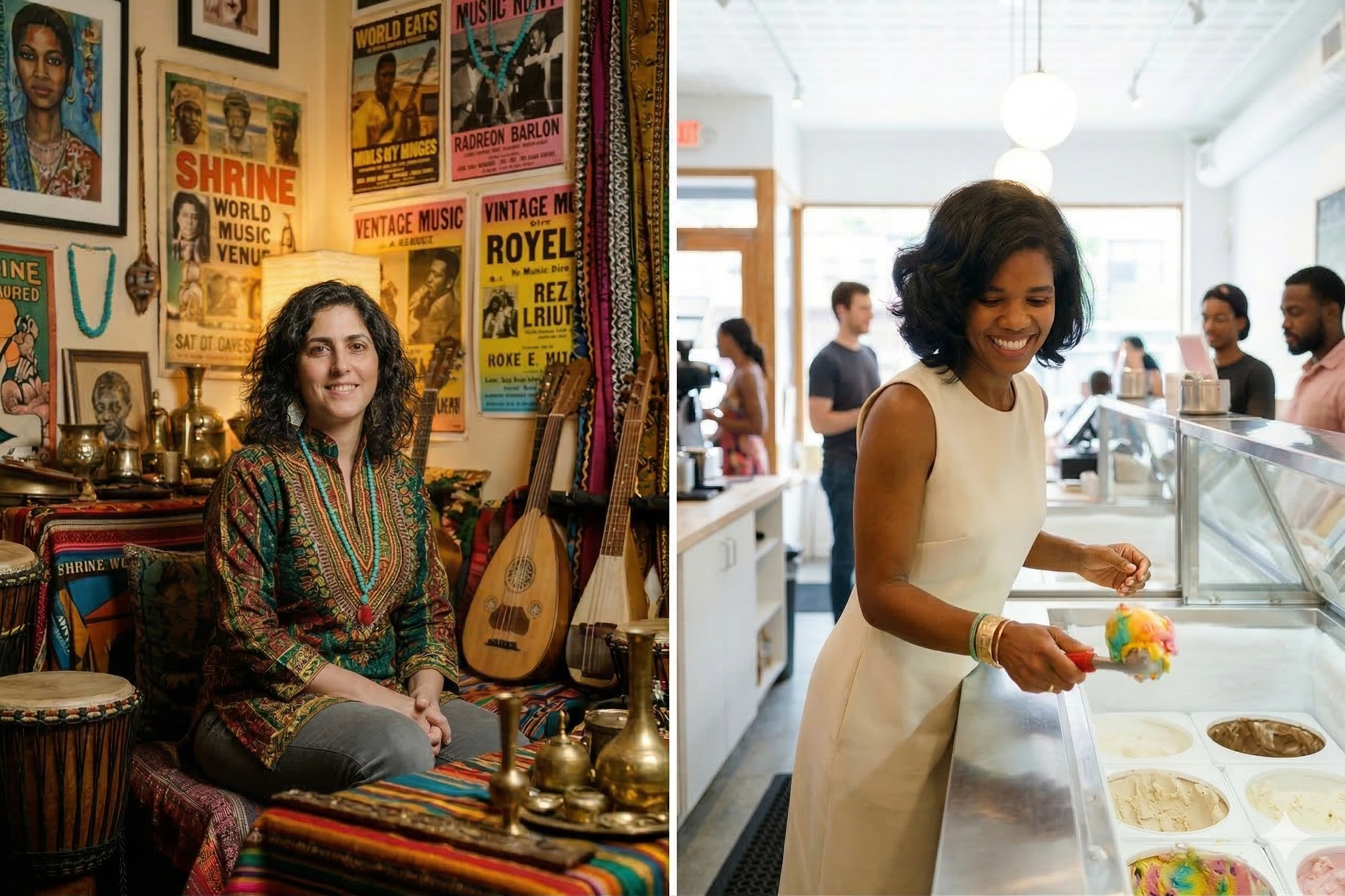
Today, the spirit of these legends lives on in the "Black United Fun Plaza." Sivan Baron, an Israeli-born visionary, has spent decades proving that Harlem’s culture is a magnet for the world. As the co-owner of Shrine, Silvana, Yatenga, and Ouaga, Sivan has built an ecosystem that feels like a living museum.
"We are not just a logarithm," Sivan asserts. In an age where AI often threatens to sanitize culture, Sivan’s venues are "High-Touch" sanctuaries. Whether it’s the Middle Eastern flavors at Silvana or the West African rhythms at Shrine, she has created a "Global Village" on Harlem soil. Her journey from opening a sports bar a month before the 2020 pandemic to turning it into a community gallery is a masterclass in what we call the "Crisis to Catalyst" mindset.
Sivan represents a vital part of the Harlem legend: the entrepreneur who isn't from the neighborhood by birth, but is of the neighborhood by soul. By amplifying Black musicians and providing storefronts for local artisans, she ensures the economic cycle stays within the 125th Street corridor.
Preserving the "Now": Petrushka Bazin Larsen
While Sivan builds the "Global Village," Petrushka Bazin Larsen is busy preserving the "Sweet Life." As the co-founder of Sugar Hill Creamery, Petrushka understands that history is happeningnow.
By naming her shop after the historic Sugar Hill district—once the home of the Black elite—she tapped into a narrative of excellence. But Petrushka’s brilliance lies in her "Audacity of Being." She uses flavors like Habichuelas con Dulce and A$AP Rocky to translate the Harlem diaspora into something you can taste.
Petrushka is also a leader in the Age of AI, using data analytics to manage the "boring" logistics of rent and labor so she can focus on "Non-AI Moments"—teaching her young staff the human art of conflict resolution and active listening. Her message is clear: "Patronize what you value. These bills don't get paid with intent; they get paid with currency."
Leading the Push: The Powerhouses of Today
Beyond our featured interviews, two other women are currently reshaping the Harlem landscape:
Nikoa Evans (Strategic Economic Growth):As a co-founder of Harlem Park to Park, Nikoa has been a tireless advocate for the small business owners of Central Harlem. She is the strategist behind the scenes, ensuring that the "Harlem brand" remains premium and that local entrepreneurs have the resources to compete with national chains.
Valerie Jo Bradley (Cultural Preservation):Through her work with Save Harlem Now!, Valerie is the guardian of the neighborhood's physical history. She leads the push to landmark the brownstones and corridors that women like the Edwards sisters once walked, ensuring that the skyline of Harlem reflects its legendary past.
The 100-Year Bridge: ESRA Realty and the Future
We cannot talk about Harlem’s future without acknowledging those who have held the keys for a century. M. Russell Grey and Aden Seraile, the third generation of the Edwards family legacy at ESRA Realty, are the bridge between the 1925 blueprints and the 2026 digital marketplace.
They are teaching a new generation of "steward-owners" that real estate is the ultimate engine for generational wealth. By using AI to analyze market trends while maintaining the "handshake" culture their great-aunts started, they prove that a legacy doesn't survive by staying the same—it survives by adapting.
Conclusion: Your Contribution to the Legend
Harlem’s influence on the world is a result of a century of women who refused to be moved. From the Edwards sisters to Sivan and Petrushka, these women show us that the "Business of Legacy" is about more than profit; it's about belonging.
As we celebrate these pioneers, we invite you to be part of the story. Support the shops, listen to the music, and invest in the community. The next 250 years of the American story are being written right here, on the streets of Harlem.
