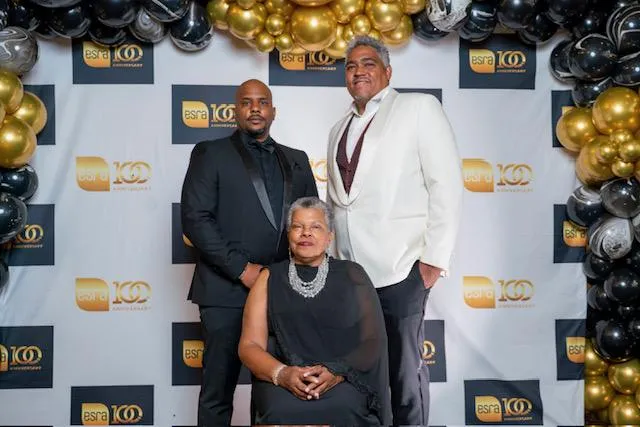
The Master Key of Legacy: ESRA is Centering Harlem’s Hundred-Year Foundation in the Age of Digital Real Estate
Harlem is more than just a neighborhood; it is a living, breathing story of resilience, rhythm, and real estate. As we celebrate Women’s History Month, the Black History Centennial, and the American Semiquincentennial (250th Anniversary), one name stands as a pillar of this history: ESRA Realty LLC.
For 100 years, ESRA has done more than just sell property. They have built the foundation of the Black American Dream in New York City. Today, led by cousins Maurice Russell Grey and Aden Seraile—the third generation of a family real estate dynasty—the firm is proving that while the tools of the trade are shifting toward Artificial Intelligence (AI) and digital marketing, the heart of the business remains rooted in family legacy.
The Visionary Sisters: A Foundation of Women’s History
The story of ESRA begins in 1925, during a time when Harlem was just beginning to take shape as the Black Mecca of the world. While many stories of that era focus on men, ESRA’s origin is a powerful testament to female entrepreneurship.
The firm was founded by three sisters—Millicent, Sarah, and Lucille Edwards—who immigrated to New York from British Guiana. Arriving through Ellis Island, these women stepped into a transitional Harlem. At the time, Black residents were being pushed out of areas like Seneca Village to make way for Central Park and were looking for a place to call home.
The Edwards sisters didn’t just find a home; they created a gateway for others. By founding Edward Sisters Realty, they became some of the first Black women to navigate the complex world of New York real estate. They saw a need for housing in a community facing systemic barriers and met it with grace, grit, and professional excellence. Lucille Edwards Chance even went on to become the first Black woman to practice law in New York State, combining legal acumen with real estate to protect Harlem’s property owners.
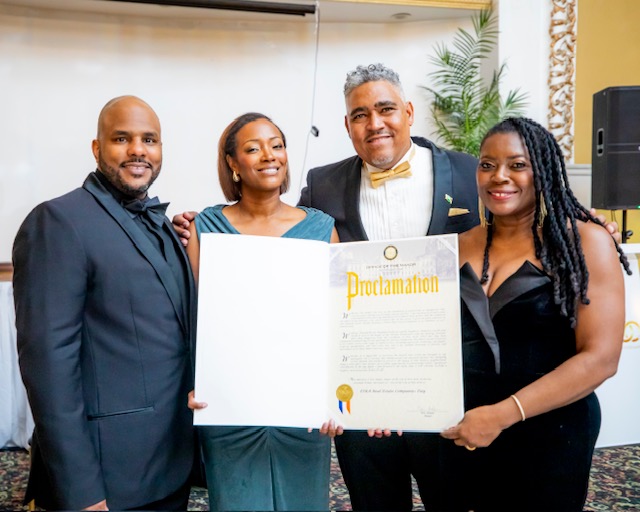
100 Years of Black Ownership: A Centennial of Service
In the world of business, reaching a 100-year anniversary is a rare feat. For a Black-owned business, it is a historic triumph. ESRA’s centennial aligns perfectly with the Black History Centennial, marking a century of overcoming redlining, deed restrictions, and predatory lending.
"To be 100 years as a Black business is especially significant," says Maurice Russell Grey, known as Russell. "We’re dealing with hurdles that haven't gone away—they’re just not as overt as they used to be. There were literally things on the books where you legally could not own property as a Black person in Harlem."
Russell and Aden are the third generation of this real estate dynasty. Their grandfather was a New York State Supreme Court Judge. Russell inherited a keen eye for property from his father, a seasoned owner and property manager of real estates. Meanwhile, Aden's savvy in the property game was a gift from his mother, a long-standing and astute real estate attorney at the firm. Their family history reads like a "Who's Who" of American icons. Their lineage is intertwined with the stories of Malcolm X, Thurgood Marshall, and Jackie Robinson.
"This business can touch almost every storyline all the way through," explains Aden Seraile. "What used to live in a book is actually coming alive in front of us."
The "Intoxicating" Fabric: Choosing Harlem Over Wall Street
Aden’s journey to the family business wasn't a straight line. After graduating from Morehouse College, he planned to work on Wall Street. However, he returned to New York exactly one week before 9/11. With the financial district in chaos, he decided to help out at the family office for "a couple of weeks."
He never left.
"The opportunity of being a part of Harlem and being a part of the fabric of Harlem became super intoxicating," Aden shares. He realized that while Wall Street dealt in numbers, the "Black Wall Street" of Harlem dealt in lives. He traded the pursuit of corporate stocks for the pursuit of community stability.
Changing Lives: The Generational Wealth Factor
Real estate is the primary engine for building generational wealth in America. For many Black families in Harlem, ESRA was the key that unlocked that door.
Aden shares a touching story of a woman who spent days searching St. Nicholas Avenue for their office. Her mother had bought a home from Aden’s grandmother 40 years ago and refused to let any other firm handle the sale of that legacy.
"If they were not able to obtain something of this rich value at a time when they did, it changed the trajectory of their family’s economic capacity," Aden says. A home bought for $25,000 in the 1970s or 80s in Harlem—when "nobody wanted to be here"—is often worth millions today. That is the "Business of Legacy" in action.
Real Estate in the Age of AI: The New Digital Toolbelt
While ESRA is built on a century of tradition, they are not stuck in the past. As we move into 2026, the real estate market is being transformed by Artificial Intelligence (AI) and digital tools.
For Aden and Russell, AI isn't a replacement for the human touch—it’s a "companion."
How ESRA Uses AI Today:
Efficiency: Using AI note-takers to record meetings and generate "to-do" lists, saving hours of administrative work.
Investment Analytics: Using AI to analyze property data in minutes, determining if a building is a "go or no-go" for investment.
Market Trends: Utilizing data models to understand shifting values in the Harlem market.
Creative Visualization: Helping clients see the "gem" inside a run-down brownstone by using digital floor plans and 3D modeling.
"AI can analyze what’s there. A human being looks at what’s there and says whatcanbe," Russell notes. "We sell dreams. We’re selling a future."
The Bill Clinton Era and the Waves of Change
Russell recalls the 1970s and 80s when Harlem faced high crime and economic abandonment. But everything changed in the late 90s.
"The Empowerment Zone and Bill Clinton coming in—that was a big moment in terms of the change of the trajectory of Harlem," Russell explains. Suddenly, a community that "nobody wanted a part of" became the place everyone wanted to be. Prices skyrocketed, and ESRA was there to ensure that long-time residents didn't lose their footing during the surge. They navigated the "waves" of the market, proving that 100-year businesses are the ones that can survive the lulls.
The Future of Harlem: Becoming "Steward-Owners"
One of the biggest challenges facing Harlem today is the shift from a community of owners to a community of "generational renters." Russell and Aden are working to change that through their leadership in the Greater Harlem Real Estate Board, established in 1929.
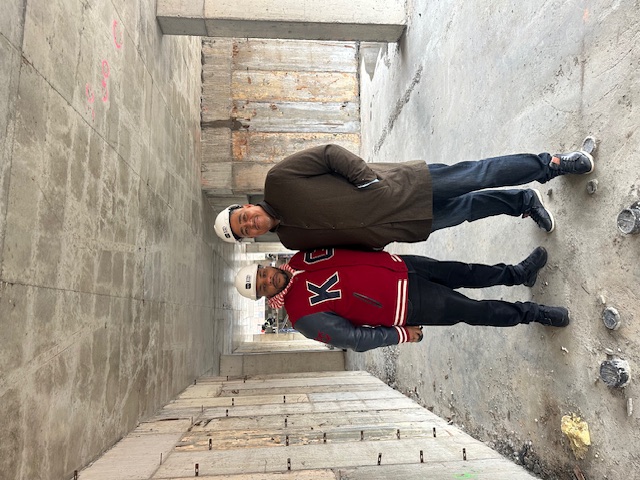
They are passionate about teaching the next generation. They bring their own children to development sites to show them the "blueprint" of how money is made and how communities are built.
"We want them to understand that you can own, you can build," Russell says. "If you don't see it, you don't think it’s a realistic goal. We become generational renters because we haven't seen ownership." By mentoring local teens through board programs, ESRA is ensuring that the next 100 years of Harlem history are written by the people who live there.
Why Legacy Matters in 2026
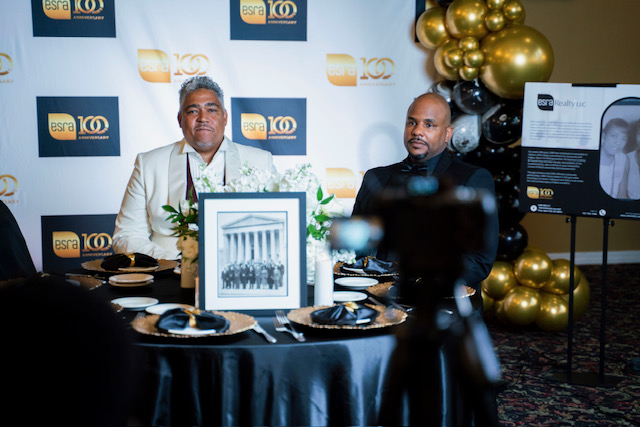
As the United States approaches its Semiquincentennial, stories like ESRA’s remind us that the American Dream is a marathon, not a sprint. In a world of "digital real estate" and "AI-driven markets," the local expert who knows every brick on 135th Street is more valuable than ever.
ESRA Realty is the bridge between the Harlem Renaissance of the 1920s and the Digital Renaissance of the 2020s. They are the keepers of the past and the architects of the future.
Final Thoughts from the Experts
The message from ESRA is clear: Adapt or get left behind. "Over the next five to ten years, there’s going to be two types of companies," Aden warns. "Those who incorporate AI as a part of their business and those that get bought out by the companies that did."
ESRA Realty has survived economic waves, social shifts, and technological revolutions by staying true to their mission: providing a home and a legacy for the people of Harlem.
Don't let history pass you by—crown your legacy with the tools of tomorrow by partnering with Harlem Thrive to master AI and digital marketing today. Contact us at [email protected] or (646) 828-1238.
